


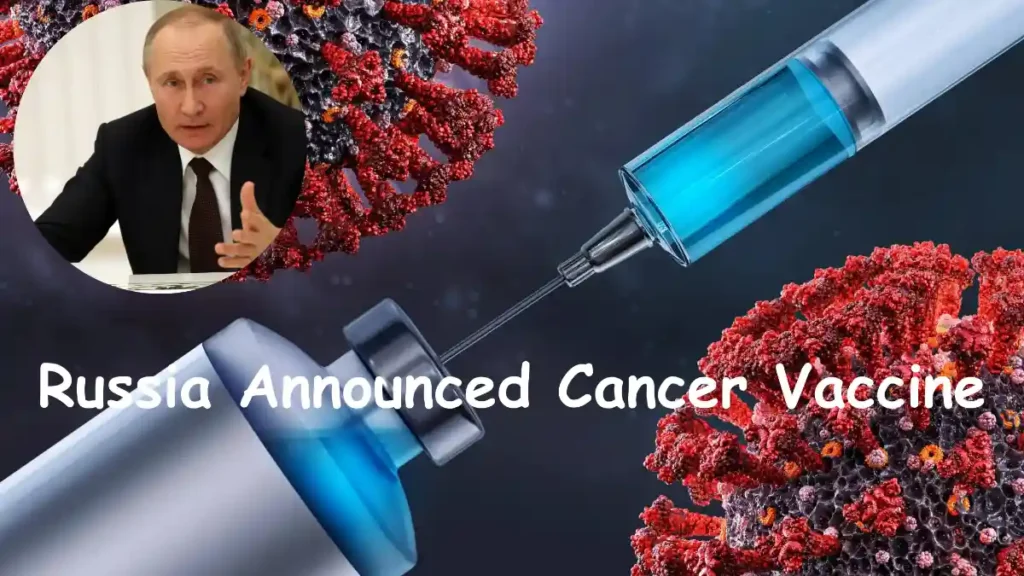
Russia’s Enteromix Cancer Vaccine Delivers 100% Results in Early Tests
There is a good news for all the people. We know many of people are suffering from Cancer and treatment is very costly. Many of people die due to cancer.
In 2022 research, there were an estimated 20 million new cancer cases and 9.7 million deaths. The estimated number of people who were alive within 5 years following a cancer diagnosis was 53.5 million. About 1 in 5 people develop cancer in their lifetime, approximately 1 in 9 men and 1 in 12 women die from the disease.
Russia’s Enteromix Cancer Vaccine
Russia has finally announced encouraging results from early human trials of its new cancer vaccine, Enteromix. The vaccine showed 100% effectiveness and no serious side effects in the first phase of testing, where patients experienced tumour shrinkage.
Enteromix is built on mRNA technology, the same approach used in COVID-19 vaccines. Instead of a one-size-fits-all method, this therapy is personalized. Each dose is designed around the genetic profile of a patient’s tumour, teaching the immune system to recognize and destroy cancer cells. The idea is to provide a safer, more precise alternative to treatments like chemotherapy.
The initial study included 48 colorectal cancer patients and was carried out by Russia’s National Medical Research Radiological Centre with the Engelhardt Institute of Molecular Biology. The results were shared at the 2025 St. Petersburg International Economic Forum, and the vaccine is now moving closer to review by Russia’s Ministry of Health.
What makes Enteromix stand out is its twofold innovation?
Each vaccine is individually tailored to a patient’s tumour genetics.
The mRNA platform allows for faster, more flexible vaccine development than past cancer vaccine attempts.
If larger trials confirm these results, Enteromix could change cancer care worldwide. It could shift treatment away from broad, harsh therapies toward safer, patient-specific options.
For India, where cancers like colorectal and cervical are among the leading causes of death, a vaccine like this could be especially impactful. The challenge will be making it affordable and ensuring the infrastructure is in place for personalized production and delivery.
Still, it is early days. Success in a small group does not guarantee the same results in larger, more diverse populations. Practical hurdles such as cost, cold-chain storage, and genetic testing will also need solutions before this approach becomes mainstream.
The Most Common Cancers in 2022: Lung, Breast and Colorectal
New data from the International Agency for Research on Cancer’s “Global Cancer Observatory” shows that just 10 types of cancer made up about two-thirds of all new cases and deaths worldwide in 2022. The data covers 185 countries and 36 different cancers.
Lung cancer was the most common overall, with 2.5 million new cases, or about 12% of the global total. Breast cancer came next with 2.3 million cases (nearly 12%), followed by colorectal cancer with 1.9 million cases (around 10%). Prostate cancer (1.5 million cases) and stomach cancer (970,000 cases) rounded out the top five.
Lung cancer also caused the most deaths, responsible for 1.8 million lives lost in 2022 nearly one in five cancer deaths. Colorectal cancer was the second leading cause (900,000 deaths), followed by liver cancer (760,000), breast cancer (670,000), and stomach cancer (660,000). Experts suggest that the rise of lung cancer again as the most common is linked to continued tobacco use in parts of Asia.
The picture looks a little different when you separate by sex. For women, breast cancer was both the most common diagnosis and the leading cause of death. It was the top cancer in 157 of 185 countries. For men, lung cancer took both of those spots, with prostate and colorectal cancers close behind in new cases, and liver and colorectal cancers as leading causes of death. For women, lung and colorectal cancers were the second and third most common and deadliest.
Cervical cancer also remains significant. It was the eighth most common cancer globally, with about 661,000 new cases, and the ninth leading cause of cancer death, with 348,000 deaths. It is the most common cancer among women in 25 countries, many of them in sub-Saharan Africa. The World Health Organization points out, though, that cervical cancer can actually be eliminated as a public health problem if prevention and treatment programs, like HPV vaccination and screening, are expanded.
Disclaimer
This article provides general information only and is not a substitute for professional medical advice. Always consult a qualified doctor for diagnosis and treatment. This information providing according to the report available online.